

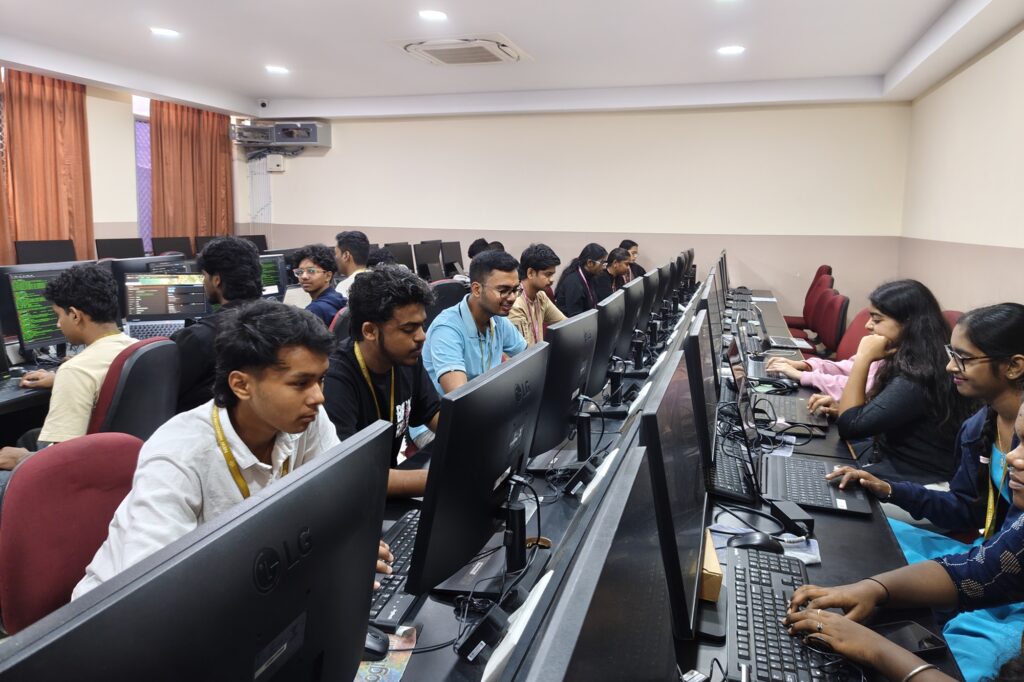
CSE Full Form Explained: Why Choose Computer Science Engineering?
CSE stands for Computer Science Engineering — one of the most sought-after undergraduate engineering programmes in India and globally. Every year, hundreds of thousands of students list CSE as their first preference in engineering entrance examinations, drawn by its career prospects, its intellectual scope, and the central role that software and technology play in almost every industry worldwide.
But what does a Computer Science Engineering degree actually involve? What will you study, what skills will you build, and where can it take you professionally? This article answers those questions clearly — helping students make an informed choice rather than simply following the crowd.
CSE Full Form and What It Means
CSE stands for Computer Science Engineering. It is a four-year undergraduate engineering programme (B.E. or B.Tech) that combines the theoretical foundations of computer science — algorithms, data structures, computational theory, and mathematics — with the practical engineering skills needed to design, build, and maintain software systems and computing infrastructure.
Unlike a pure computer science degree (which tends to be more theoretical) or an information technology degree (which tends to be more applied and systems-focused), CSE occupies a middle ground — rigorous in its theory, practical in its application, and broad enough to open pathways into almost every area of the technology industry.
Students evaluating CSE programmes at a Best Educational Institute in Bangalore should look for a curriculum that balances theoretical depth with practical laboratory work, industry exposure, and research opportunities — because the best CSE graduates are as comfortable reasoning about algorithms as they are building production-grade software.
What Do You Study in Computer Science Engineering?
The CSE curriculum typically spans eight semesters over four years. The content progresses from foundational mathematics and science in the first year through to specialised electives and project work in the final year. Core subjects include:
Mathematics and Foundations
- Discrete mathematics — the mathematical foundation for algorithms, logic, and data structures
- Linear algebra and calculus — essential for machine learning, graphics, and optimisation
- Probability and statistics — foundational for data science, AI, and systems design
- Digital logic and circuits — the bridge between computer science and electronics engineering
Core Computer Science Subjects
- Data structures and algorithms — the intellectual core of the programme; covers how data is organised and how problems are solved efficiently
- Operating systems — how computers manage hardware resources, processes, and memory
- Computer networks — how computers communicate, the architecture of the internet, and network security
- Database management systems — how data is stored, retrieved, and managed at scale
- Theory of computation — the mathematical study of what computers can and cannot do
- Compiler design — how programming languages are translated into machine-executable instructions
- Software engineering — the principles and practices of designing, building, and maintaining large software systems
Specialisation and Elective Areas
In the third and fourth years, CSE programmes typically offer elective modules in specialised areas:
- Artificial intelligence and machine learning
- Computer vision and image processing
- Cloud computing and distributed systems
- Cybersecurity and ethical hacking
- Human-computer interaction and UX design
- Internet of Things (IoT) and embedded systems
- Blockchain technology and decentralised systems
CSE vs IT vs IS: What’s the Difference?
Students often encounter three similar-sounding programmes — CSE, IT (Information Technology), and IS (Information Science) — and struggle to distinguish between them. Here’s a clear comparison:
|
Aspect |
CSE |
IT (Information Technology) |
IS (Information Science) |
|---|---|---|---|
|
Primary focus |
Theory and engineering of computing systems |
Deployment and management of technology in organisations |
Information systems, databases, and business technology |
|
Theoretical depth |
High — includes theory of computation, algorithm design |
Moderate — more applied than CSE |
Moderate — more management-oriented |
|
Career orientation |
Software development, AI, systems, research |
Networking, system administration, enterprise software |
Database management, business analytics, ERP |
|
Programming emphasis |
Very high |
High |
Moderate |
|
Typical recruiters |
Product companies, startups, research labs |
IT services companies, MNCs, system integrators |
Consulting firms, banking, data analytics companies |
None of these is objectively better — the right choice depends on the student’s interests and career goals. CSE is the strongest foundation for roles in software product development, research, and AI. IT and IS tend to be more directly oriented toward enterprise technology and information management roles.
Why Choose Computer Science Engineering?
Unmatched Career Demand
Software engineers, data scientists, AI researchers, cloud architects, and cybersecurity specialists are among the most in-demand professionals in the global economy — and most of these roles require the foundations that a CSE degree provides. India’s technology sector alone employs millions of CSE graduates, and demand continues to grow substantially year on year.
Exceptional Salary Potential
CSE graduates consistently rank among the highest earners of all engineering disciplines in India. Entry-level packages at product companies and global technology firms regularly range from ₹8–25 LPA for strong candidates from quality institutions, and senior roles command significantly higher compensation. Specialisations in AI, machine learning, and cloud computing attract particularly premium salaries.
Versatility Across Industries
One of CSE’s greatest strengths is that software and data capabilities are now required in every industry — healthcare, finance, education, logistics, media, agriculture, and manufacturing all depend on the kind of expertise a CSE graduate can provide. This cross-industry demand provides graduates with career flexibility that few other disciplines can match.
Strong Foundation for Advanced Study and Research
CSE provides an excellent preparation for postgraduate study — M.Tech, MCA, MBA in technology management, or direct PhD programmes. Global universities in the US, UK, Canada, and Europe recruit Indian CSE graduates in large numbers for their master’s and doctoral programmes. Research opportunities in AI, quantum computing, cryptography, and systems design are among the most exciting in all of science and engineering.
Students at a Best Educational Institute in Bangalore pursuing CSE can leverage industry partnerships, research labs, internship networks, and placement programmes that significantly enhance their career prospects compared to students at institutions without these resources.
What Skills Does CSE Build?
Beyond the technical content, a well-designed CSE programme builds a set of transferable capabilities that are valuable across roles and industries:
- Algorithmic thinking — the ability to break complex problems into structured, solvable components
- Computational reasoning — thinking precisely about what a system does, why, and what could go wrong
- Software craftsmanship — writing clean, maintainable, testable code that solves real problems reliably
- Systems thinking — understanding how components interact and how complexity is managed at scale
- Mathematical rigour — applying formal mathematical reasoning to engineering problems
- Collaborative development — working effectively in teams using modern development tools and practices
Career Paths After CSE
The career landscape for CSE graduates is broad and continues to expand. Some of the most common and rewarding paths include:
- Software Engineer / Developer — the most common career path; roles range from front-end and back-end development to full-stack engineering at product companies and startups.
- Data Scientist / Machine Learning Engineer — applying statistical and computational skills to extract insights from data and build intelligent systems.
- Cybersecurity Analyst or Engineer — protecting systems, networks, and data from threats, a field with consistently strong demand and high salary premiums.
- Cloud Architect / DevOps Engineer — designing and managing cloud infrastructure at scale for organisations of all sizes.
- Product Manager (Technical) — bridging engineering and business, managing the development of software products from conception to launch.
- Research Scientist — working at the frontier of computing knowledge in academia, corporate research labs, or government institutions.
- Entrepreneur — founding technology startups; CSE graduates are consistently overrepresented among technology entrepreneurs globally.
What to Look for in a CSE Programme
Not all CSE programmes deliver equal outcomes. When evaluating options, students should consider:
- Curriculum quality — does the programme balance theory and practice? Are elective options modern and industry-relevant?
- Faculty expertise — are faculty members active in research and industry engagement, or teaching from outdated knowledge?
- Laboratory and computing facilities — is there access to high-performance computing, cloud platforms, and modern development environments?
- Industry partnerships — does the institution have active relationships with technology companies that translate into internship and placement opportunities?
- Research culture — is undergraduate research encouraged and supported?
- Placement track record — what is the historical placement rate and average package for CSE graduates?
Choosing a CSE programme at a Best Educational Institute in Bangalore that scores well across all these dimensions — rather than selecting solely on the basis of brand name or fee structure — is the most reliable way to maximise the return on your investment in engineering education.
Key Takeaways
- CSE stands for Computer Science Engineering — a four-year B.E./B.Tech programme combining computing theory with engineering practice
- Core subjects include data structures, algorithms, operating systems, networks, databases, software engineering, and theory of computation
- CSE differs from IT and IS in its greater theoretical depth and stronger orientation toward software product development and research
- Career paths span software development, data science, AI, cybersecurity, cloud architecture, research, and entrepreneurship
- Programme quality — faculty, facilities, industry partnerships, and placement record — matters as much as the CSE label itself
Conclusion
Computer Science Engineering is not the right choice for every student — but for students with a genuine interest in how systems work, how problems can be solved computationally, and how technology can be used to create real value, it is one of the most intellectually rewarding and professionally open engineering programmes available. Choose it because it genuinely interests you, pursue it at an institution with strong faculty and industry connections, and invest in the foundational skills that make the difference between a graduate who can write code and one who can build the future.
FAQs
- What is the full form of CSE?
CSE stands for Computer Science Engineering. It is a four-year undergraduate engineering programme (B.E. or B.Tech) that combines the principles of computer science with engineering methodology.
- What is the difference between CSE and IT?
CSE (Computer Science Engineering) has a stronger emphasis on computing theory, algorithm design, and software engineering fundamentals. IT (Information Technology) is more focused on the deployment and management of technology systems within organisations. CSE tends to be more theoretical and better suited to product development and research roles.
- Is CSE a good career choice in India?
Yes — CSE graduates are among the most consistently in-demand and well-compensated engineering graduates in India. Strong employment across the technology sector, financial services, healthcare, and startups makes CSE one of the most versatile and rewarding career foundations available.
- What subjects are taught in CSE?
Core subjects include data structures and algorithms, operating systems, computer networks, database management systems, software engineering, theory of computation, and compiler design. Advanced electives cover AI/ML, cybersecurity, cloud computing, computer vision, and IoT, among others.
- What is the average salary for a CSE graduate in India?
Entry-level salaries vary significantly by institution and specialisation. Strong candidates from quality programmes can expect ₹8–25 LPA at product companies and global firms. Specialisations in AI, cloud, and cybersecurity typically attract premium offers. Mid-career salaries for skilled CSE professionals can be substantially higher.
- Can CSE graduates work in non-technology industries?
Yes. Software, data, and AI capabilities are now required across all industries — healthcare, finance, logistics, education, and manufacturing all actively recruit CSE graduates. This cross-industry demand is one of CSE’s greatest career advantages.
- What is the scope of CSE for higher studies abroad?
CSE provides an excellent foundation for postgraduate study at universities worldwide. Indian CSE graduates are recruited by master’s and PhD programmes in the US, UK, Canada, Australia, and Europe in large numbers, particularly for specialisations in AI, systems, cybersecurity, and human-computer interaction.
- How important is the institution for a CSE degree?
Very important. The quality of faculty, research culture, computing facilities, industry partnerships, and placement networks varies significantly between institutions offering CSE. Graduates from institutions with strong industry connections and research-active faculty consistently achieve better career outcomes than equally talented graduates from weaker institutions.